
Introduction
Winter weather can transform sidewalks, front steps, driveways, and entryways into slippery, hazardous surfaces. Even a moderate snowfall can make it difficult for homeowners, visitors, delivery drivers, and customers to move around a property safely. When snow accumulates near doors and along pedestrian paths, it can also block access, create drainage problems, and increase the risk of slips and falls.
Specialized snow clearing for walkways and entryways helps keep these essential areas accessible throughout the winter season. Unlike general driveway plowing, this service focuses on the smaller, high-traffic spaces people use every day. Proper snow removal, attention to icy spots, and timely maintenance can make a significant difference in winter safety.
For property owners who want to maintain a clean, accessible outdoor environment, professional snow clearing offers a practical solution. With the right approach, walkways and entrances can remain easier to navigate during changing winter conditions.
Simple Lawn Services understands the importance of maintaining outdoor spaces through seasonal changes. Preparing pedestrian areas for winter and keeping them clear after snowfall can help property owners protect their visitors, maintain curb appeal, and reduce the stress of managing snow during busy winter mornings.
What Is Specialized Snow Clearing for Walkways and Entryways?
Specialized snow clearing is the process of removing snow and managing icy conditions in pedestrian areas around residential and commercial properties. These areas often require more careful attention than large driveways or parking lots because they include narrow paths, stairs, doorways, ramps, and other surfaces where people walk.
The goal is to make these spaces accessible while reducing hazards caused by snow accumulation, compacted ice, and refreezing moisture.
Common areas covered by walkway and entryway snow removal include:
- Front sidewalks and pathways leading to the house.
- Front porches, steps, and exterior stairways.
- Side and rear entrances.
- Garage-to-house walkways.
- Paths leading to mailboxes and outdoor storage areas.
- Commercial entrances and pedestrian access points.
- Walkways connecting driveways to doors and gates.
- Accessible ramps and other designated pedestrian routes.
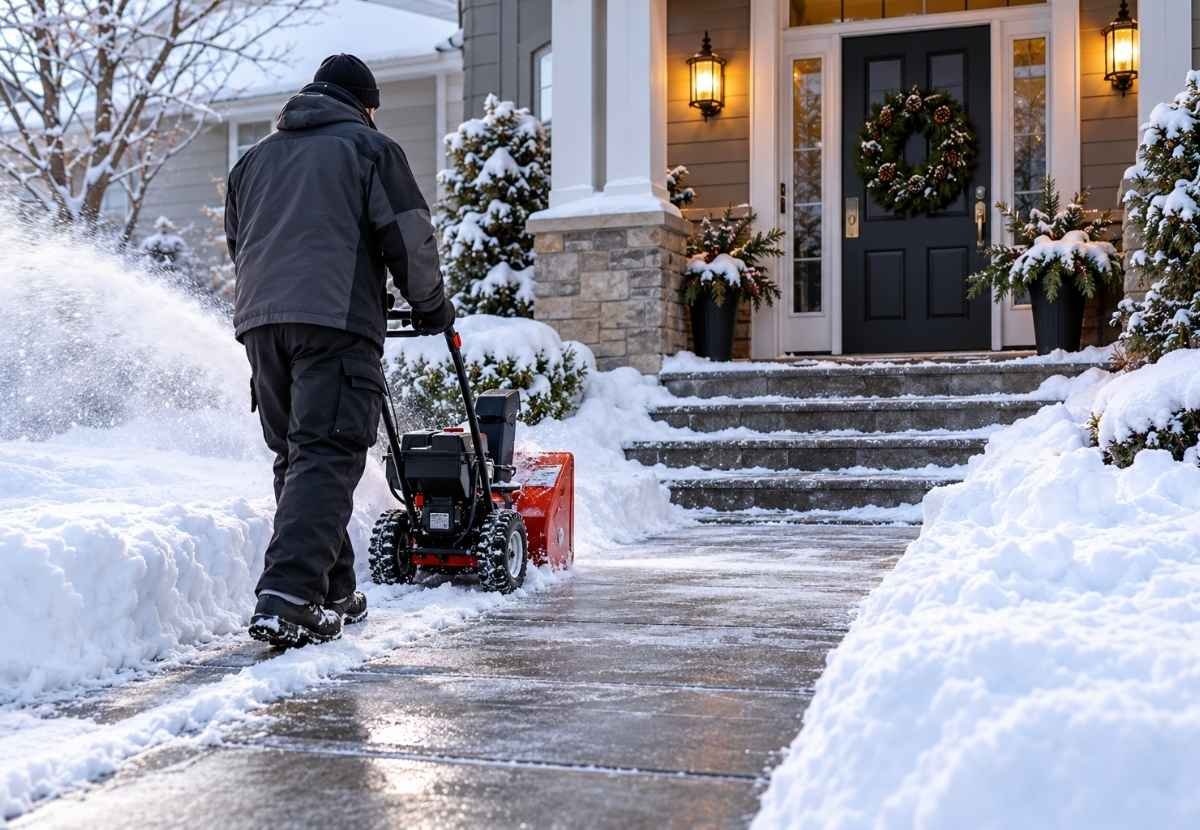
Each area presents different challenges. A narrow walkway may require a shovel or compact snow blower, while steps need careful clearing to prevent damage and leave a stable walking surface. Entryways may also need additional attention because snow carried indoors can melt and contribute to slippery floors.
A specialized approach considers the property’s layout, surface materials, expected snowfall, and the needs of people using the space.
Why Is Professional Snow Clearing Important for Walkways and Entryways?
Snow removal is not simply about keeping a property looking neat. Clear pedestrian routes help people enter and leave buildings with greater confidence during winter weather.
1. Reduces Slip and Fall Hazards
Snow can conceal uneven pavement, cracks, steps, and other obstacles. When temperatures fluctuate, melting snow can refreeze and create thin layers of ice that are difficult to see.
Prompt snow removal helps limit accumulation before it becomes compacted. When appropriate, ice-melting products or traction materials can also help manage slippery areas.
Michigan safety guidance recommends keeping walking surfaces clear and using suitable materials to improve traction during winter conditions. January 6, 2026+1
2. Keeps Entrances Accessible
Snowdrifts can block doors, narrow walkways, and cover steps. These obstacles make ordinary activities more difficult, especially for older adults, children, visitors, and people with mobility limitations.
Specialized snow clearing focuses on maintaining practical access from the driveway or sidewalk to the entrance. This includes clearing the full usable width of a path where possible and ensuring that snow piles do not obstruct doorways or ramps.
3. Protects Your Property’s Appearance
A clean walkway creates a more organized appearance, even when the surrounding landscape is covered in snow. Clearing paths, steps, and entry areas helps prevent a property from looking neglected during the winter months.
For homeowners who take pride in maintaining their outdoor spaces, consistent winter care is a natural extension of regular lawn and landscape maintenance.
4. Saves Time and Physical Effort
Shoveling snow repeatedly can be tiring, particularly during heavy snowfall or prolonged cold weather. Property owners may also have to clear snow before work, appointments, school runs, or other daily responsibilities.
Professional snow clearing can reduce this workload and help keep important access points manageable throughout the season.
Which Areas Need Specialized Snow Removal?
Not every part of a property requires the same snow-clearing method. Identifying high-priority pedestrian areas helps ensure that important routes remain usable.
Front Walkways and Sidewalks
Walkways connecting the driveway, public sidewalk, and front door should be cleared as soon as practical after snowfall. Removing snow before people repeatedly walk over it can help prevent it from becoming packed down.
Snow should be placed in a suitable location on the property rather than pushed into streets or onto neighboring walkways. Michigan State Police also advises against piling cleared driveway snow onto sidewalks because it can force pedestrians into the road. Michigan.gov+1
Steps, Porches, and Stairs
Steps require particular care because even a small amount of snow or ice can affect footing. Clearing should include the tread of each step, the landing, and the area immediately outside the door.
Handrails should remain accessible, and snow should not be piled where it blocks the route or interferes with opening a door.
Side and Rear Entrances
Secondary entrances are easy to overlook during winter. However, they may be used for taking out rubbish, accessing a garage, entering a utility area, or reaching the backyard.
Including these routes in a snow-clearing plan helps prevent them from becoming blocked or hazardous.
Garage and Driveway Connections
A cleared driveway does not automatically mean the route to the house is safe. Snow may remain between the garage and the entrance, particularly around narrow side paths.
Clearing these connecting areas creates a more continuous pedestrian route.
Commercial Walkways and Ramps
Businesses need to consider employees, customers, delivery personnel, and visitors who rely on safe entrance routes. Ramps and designated accessible paths should receive particular attention because accumulated snow can reduce usable space and make movement more difficult.
Property managers should also consider lighting, handrails, and entrance mats as part of their broader winter safety plan. January 6, 2026+1
How Does Specialized Snow Clearing Work?
An effective snow removal process combines preparation, careful clearing, and ongoing monitoring. The exact method depends on the amount of snow, the type of surface, and current weather conditions.
Step 1: Assess the Property
Before clearing begins, identify the main pedestrian routes, steps, entrances, ramps, and areas where snow tends to drift. Note uneven surfaces, drainage issues, and locations where melting water frequently refreezes.
This assessment helps determine which areas should receive attention first.
Step 2: Remove Accumulated Snow
Snow can be removed using shovels, snow blowers, or other suitable equipment. Narrow paths and steps often require more precise work than wide paved areas.
The objective is to clear the walking surface without damaging concrete, pavers, landscaping, door frames, or nearby property.
Step 3: Address Remaining Slippery Areas
After the snow has been removed, inspect the surface for compacted snow and ice. Suitable ice-melting products or traction materials may be used according to the surface, temperature, and manufacturer’s instructions.
Some de-icers perform poorly in extreme cold, and certain products can affect concrete, metal, plants, or pets. Choosing the right treatment is therefore important.
Step 4: Move Snow to Appropriate Locations
Snow piles should not block doorways, sidewalks, ramps, drainage outlets, or sightlines. Large piles near an entrance may also melt and send water across a walkway, where it can freeze again.
Placing removed snow in an appropriate area helps maintain access and reduces secondary hazards.
Step 5: Recheck Conditions
Snow clearing may need to be repeated during prolonged storms. After temperatures rise and fall, previously cleared areas may also become slippery.
A follow-up inspection helps identify new accumulation, refrozen water, and areas requiring additional attention.
What Makes Walkway Snow Clearing Different From Driveway Plowing?
Driveway plowing generally focuses on moving larger amounts of snow to restore vehicle access. Specialized snow clearing for walkways and entryways requires more detailed work because pedestrian areas are narrower and often contain obstacles.
| Driveway snow removal | Walkway and entryway snow clearing |
|---|---|
| Focuses on vehicle access | Focuses on safe pedestrian access |
| Often uses larger plows | May use shovels and compact equipment |
| Covers broad paved areas | Targets paths, steps, and doorways |
| Manages large snow piles | Requires careful snow placement near entrances |
| Prioritizes vehicle movement | Prioritizes clear walking surfaces and footing |
Both services can complement each other. A property may have a completely plowed driveway but still need additional work to clear the path from the vehicle to the front door.
Combining these services helps create a more complete winter maintenance plan.
How Often Should Walkways and Entryways Be Cleared?
The ideal schedule depends on snowfall intensity, temperature, wind, and how frequently people use the property.
Consider these general guidelines:
- During light snowfall: Monitor frequently used paths and clear accumulating snow before it becomes compacted.
- During heavy snowfall: Clear priority routes during the storm when conditions allow, then complete another pass after snowfall ends.
- During freezing rain: Pay close attention to steps, ramps, and paved entrances where ice can form quickly.
- During freeze-thaw cycles: Inspect areas where melting water collects and refreezes overnight.
- Before busy periods: Ensure entrances are accessible before employees arrive, customers visit, or household members leave for the day.
Local snow-removal ordinances may specify deadlines for clearing public sidewalks. Requirements vary by municipality, so property owners should check the rules that apply to their location.
Can Regular Snow Clearing Help Prevent Ice Buildup?
Yes. Removing fresh snow promptly can reduce the amount available to melt, compact, and refreeze on walking surfaces. However, snow removal alone cannot prevent every icy condition.
Ice can develop when sunlight melts snow during the day, temperatures drop overnight, or water drains across a walkway. Snow that is repeatedly compressed by foot traffic can also become difficult to remove.
A proactive winter maintenance routine should include:
- Removing snow before it becomes heavily compacted.
- Checking shaded areas where ice may linger.
- Keeping drains and suitable drainage routes clear.
- Using appropriate de-icing or traction products when necessary.
- Rechecking surfaces after changing weather conditions.
These measures help manage winter hazards, although no snow-clearing method can guarantee completely slip-free surfaces.
Why Choose Simple Lawn Services for Winter Property Maintenance?
Managing snow around a property takes time, planning, and consistent attention. Having a dependable seasonal maintenance routine helps property owners prepare for changing conditions rather than waiting until snow blocks an entrance.
Simple Lawn Services focuses on outdoor property care, making winter maintenance a natural consideration for homeowners who want to keep their properties functional throughout the year. If you are exploring specialized snow clearing for walkways and entryways, discuss your property’s layout, high-traffic areas, and expected service needs with the company.
When arranging snow removal, consider asking about:
- Which walkways, entrances, and steps are included.
- How service is scheduled during ongoing snowfall.
- Whether ice treatment is available.
- Where cleared snow will be placed.
- How narrow paths and delicate surfaces will be handled.
- Whether seasonal service arrangements are available.
Clear expectations help ensure that the most important pedestrian routes receive attention when winter weather creates challenging conditions.
Prepare Your Walkways and Entryways for Winter
Snow-covered paths and icy entrances can turn everyday activities into unnecessary challenges. Specialized snow clearing for walkways and entryways helps maintain access, improve winter usability, and reduce hazards around homes and businesses.
From front steps and sidewalks to garage connections and secondary entrances, each pedestrian area deserves attention. Timely snow removal, appropriate ice management, and regular inspections can make winter property maintenance more manageable.
Rather than allowing snow to accumulate around frequently used entrances, plan ahead and identify the areas that need consistent care. Contact Simple Lawn Services through its website, simplelawnsvc.com, to discuss your seasonal outdoor maintenance needs and explore suitable options for keeping your property accessible during winter.
Frequently Asked Questions
Q. What is specialized snow clearing for walkways and entryways?
A. It is a focused snow removal service that clears pedestrian routes, front steps, porches, sidewalks, ramps, and entrances to help maintain access and reduce winter slip hazards.
Q. When should I clear snow from my walkways?
A. Clear snow as soon as practical after it accumulates, and repeat the process during extended snowfall when conditions permit. Check local regulations for applicable sidewalk-clearing deadlines.
Q. Does walkway snow clearing include ice removal?
A. Not always. Some services include de-icing or traction treatments, while others provide snow removal only. Confirm which treatments are offered and whether they cost extra.
Q. Is professional snow clearing worthwhile for residential properties?
A. It can be especially helpful for properties with multiple entrances, long walkways, frequent snowfall, or residents who find shoveling physically difficult. A suitable service can reduce the time and effort required for winter maintenance.
Learn more about our specialized snow shoveling service in West Michigan. Simple Lawn Services LLC is a service-area business based in Holland, MI, serving Holland, Jenison, Zeeland, Hudsonville, Byron Center and Caledonia, MI. Check our service area or contact us for a free quote. Follow Simple Lawn Services on Facebook.